From the beautiful place to Löhrstraße 77
How Italy came to the RhineChapter 8
A restaurant without a year is like a wine without a label: you enjoy it, but you tell nobody about it. The Rialto has one: 1978. The town it stands in has a great many more. So before we arrive at Löhrstraße 77, we take a small detour through almost nine centuries.
Where does Schönstatt get its name?
From a compliment. In October 1143, Archbishop Albero of Trier had Augustinian nuns move to a “beautiful place” near Vallendar. In the charter it is called “eyne schoene stat”. That became Schönstatt. A tower of the convent still stands today. A place name that has been a word of praise for almost 900 years: not many manage that.
How often did the house on the castle hill change careers?
Remarkably often. In 1232 the Counts of Sayn took over the lordship, and in 1240 they built a castle where the Marienburg stands today. In 1769 Joseph Quirin d’Ester came to Vallendar, a tanner and leather merchant from Malmedy. At the urging of the Prince-Electors of Trier he founded a leather factory, had the crumbling castle pulled down and in 1773 built a stately residence on its foundations. One source gives 1779.
In 1888 the Catholic parish bought the house. After that, the Borromean Sisters lived there, and only then did it get the name “Marienburg”. Later it was a school of home economics. In 1988 WHU moved in. Castle, manufacturer’s mansion, convent, school of home economics, university: with a CV like that, the house could apply for any job.
Whom did Goethe visit in Vallendar in 1774?
The d’Ester family. On 18 July 1774 the young Goethe was their guest, as two written records confirm. An essay by Thomas Trumpp about the visit bears the title: “Ich hab die liebe Kleine bey der Dester gesehn”, I saw the dear little one at the d’Esters’. In 2024, for the 250th anniversary, the Rhein-Zeitung recalled it under the headline “The Sorrows of Young Goethe in Vallendar”. Who was the dear little one? We shall leave that as Goethe’s secret.
What is the Kannenbäckerland?
Not an administrative district but a landscape of craftsmanship, the “land of the jug bakers”, stretching from Wirges in the Westerwald to the Rhine. How its jugs travelled the world from here is told in the third chapter. Pottery is said to have been made in the region since at least 1402.
Trade and industry stayed loyal to the town. When King Frederick William IV granted Vallendar its town charter on 2 November 1856, that was precisely the reason given: its lively trade and commerce. A town that lives by trade, and a restaurant named after a bridge full of shops: they go together better than you might think.
How long has the Ristorante Rialto been around?
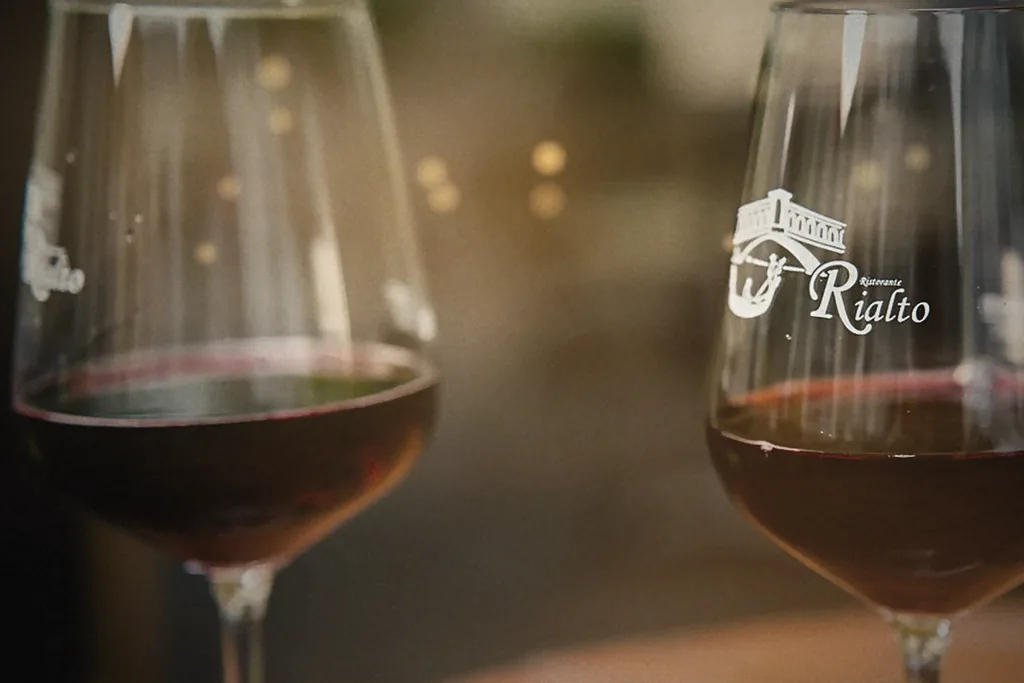
Italian food has been cooked at Löhrstraße 77 since 1978. Since then, fashions have come and gone, phones have got smaller and plates bigger. What has stayed is the aroma drifting out of the kitchen in the evening. If the walls could talk, they would ask about the garlic first and then for your name.
How did the Rialto come to the Vicari family?
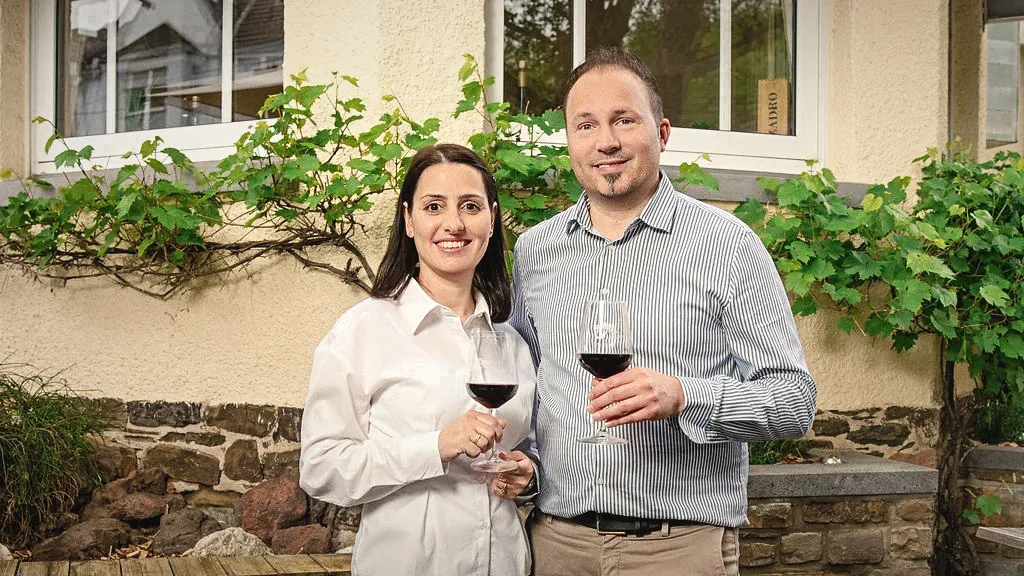
Before Giovanni and Aline Vicari came to the Rialto, they ran “da Vicari” in Vallendar. Franco Palamin had the Rialto for many years. Then he handed it over to the two of them, as friends do, the way you pass on a good recipe: not written down, but shown. Today Giovanni and Aline Vicari run the Rialto as a family business.
What drives the family?
“Creating, every day, a variety of flavours and honest, harmonious combinations on the plate from fresh, carefully chosen ingredients is what drives our craft.”
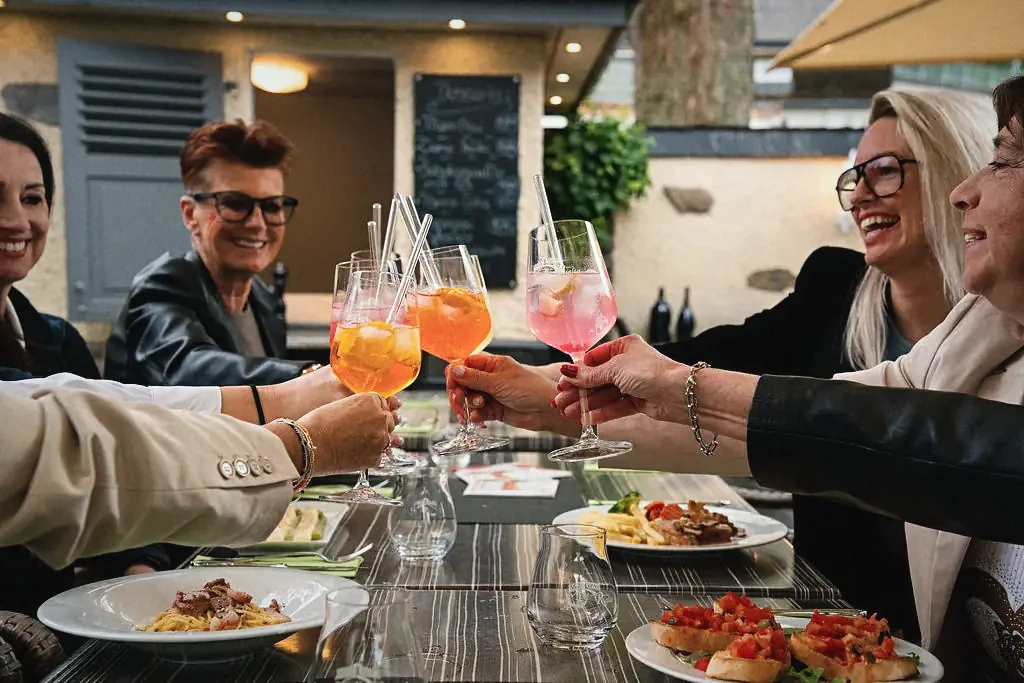
Craft is the right word. In the Rialto kitchen nobody performs magic; people work: they chop, stir, taste and taste again. Inside it is cosy, and in summer you sit outside on the shady terrace. Who else belongs to the family can be found on our team page.
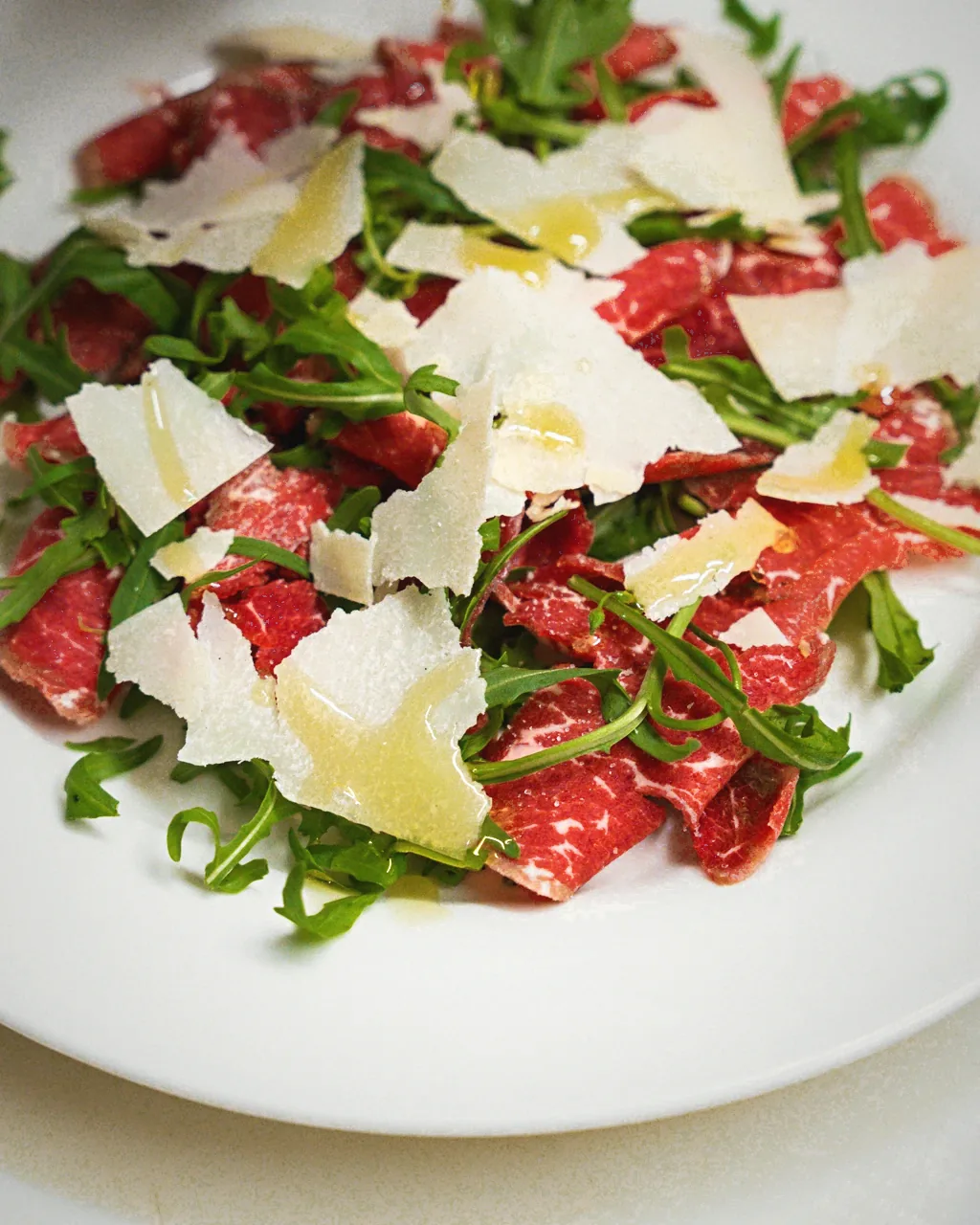
What is on the table today is on the menu page. You are welcome to book a table personally by phone on 0261 60329.
Who cooks and serves at Löhrstraße 77 today, and what the word “host” has to do with the ancient Romans, is told in the ninth chapter.
AddressRistorante Rialto, Löhrstraße 77, 56179 Vallendar
Opening hoursTuesday to Saturday 11:30–14:15 and 17:30–22:00, closed Sunday and Monday
Phone0261 60329, we are happy to book tables by phone
Feeling hungry?
That is catching here. The whole menu is one click away, a table one phone call.