Guest and host in a single word
How Italy came to the RhineChapter 9
For eight chapters it was all legionaries, chestnuts, jugs and queens. High time to introduce the people who bring all these stories to the plate every evening. In big establishments the staff wear name badges. At the Rialto nobody needs them. By your second visit you will know who brings you the wine.
Who cooks at the Rialto?
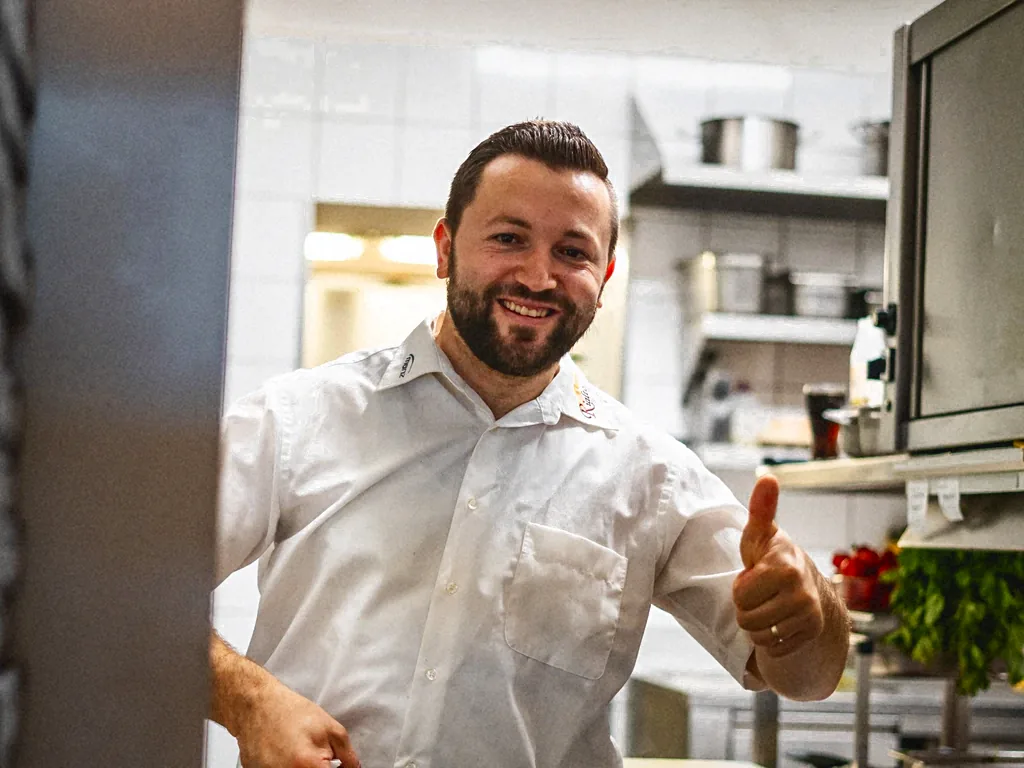
The head chef is Agim. With him at the stove are Franklin, Huy and Franzino. When a flame shoots up from the pan, it is not an emergency. It is dinner.
A restaurant kitchen in the evening is a small orchestra without sheet music. Pans clatter, the oven glows, someone calls out a table number, someone else answers with a plate. From the outside it looks like chaos. From the inside everyone knows exactly what they are doing.
What exactly is a kitchen brigade?
A military term, and that is no accident. In the 19th century the French chef Auguste Escoffier organised large hotel kitchens on the model of the army, in which he had served himself. He is said to have introduced this order at the Savoy Hotel in London. At the top is the chef de cuisine, below him the sous-chef. Then come the chefs de partie, each running a station of their own: sauces, fish, meat, pastry, vegetables. The youngest are called commis. They keep the tools at their station in order and learn the craft along the way. That is how a kitchen could feed a great many guests without the quality suffering. So Escoffier did not only write recipes; he also wrote a timetable for pans. At the Rialto the brigade is smaller and manages without French titles: head chef Agim, Franklin, Huy and Franzino.
Where do ristorante, trattoria and osteria come from?
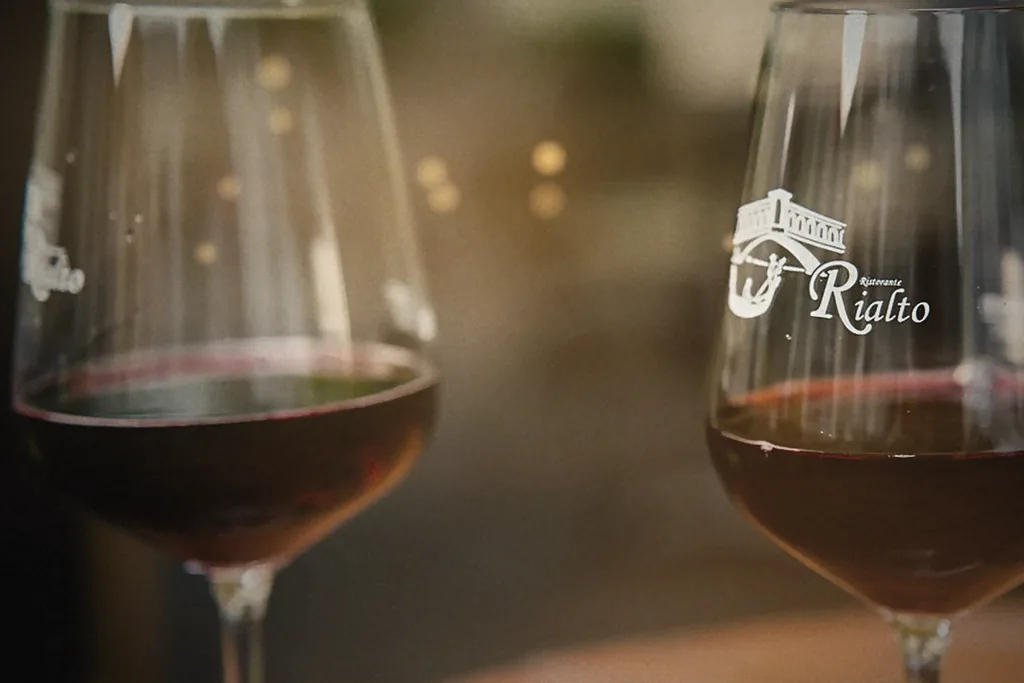
The ristorante came from France. There it was called “restaurant”, from the Latin “restaurare”, to restore, to strengthen. So a restaurant is a place that gets you back on your feet. Nice to hear after a long day. The Rialto even carries the word in its name: Ristorante Rialto, a place to restore yourself, with a bridge in its logo.
The trattoria takes its name from the “trattore”, the innkeeper who offered food. Whether the word comes from the Italian “trattare” or the French “traiteur”, the sources cannot agree. As a name for an eating house, the trattoria only appears in Italy around 1840.
The osteria is much older; it is mentioned as early as 1363. Inside it is the “oste”, the innkeeper, and inside him in turn the Latin “hospes”. The lovely thing about this word: it meant both, the guest and the host. Evidently the Romans already knew that you cannot be one without the other.
Who serves at the Rialto?
Mimmi, Rodi, Toni and Filip. They bring the plates, the wine and the recommendation of the day. Filip is often out and about as well: he brings deliveries to your home and the food to catering events.
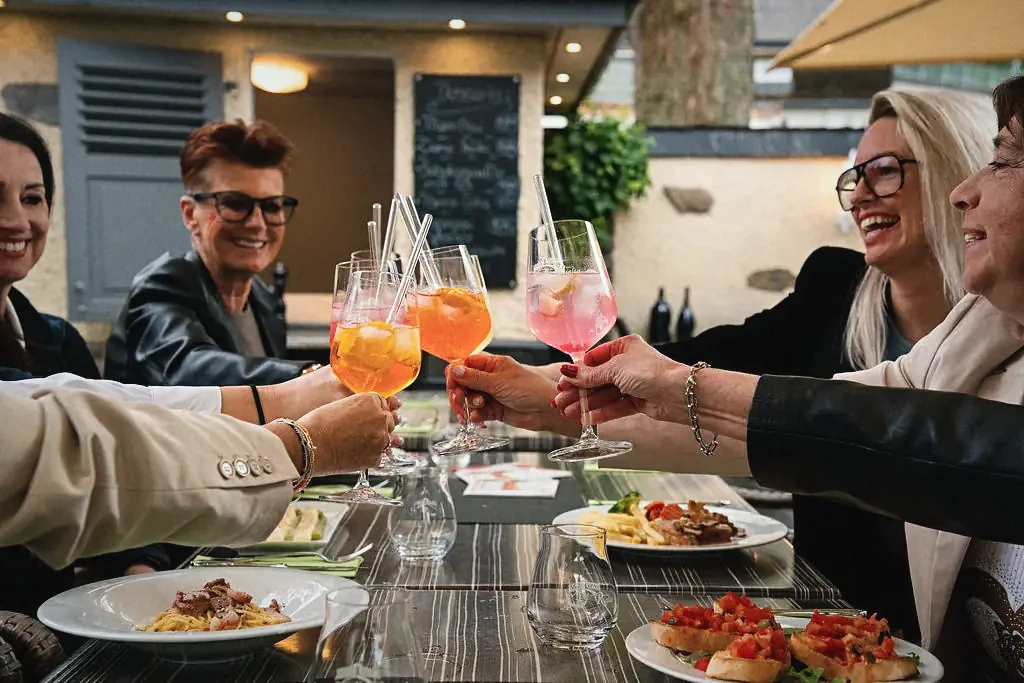
Good service is like good salt: you only notice it when it is missing. At the Rialto you notice it anyway, in a smile, in a word about the weekly menu, in the moment your glass is full again before you have to ask.
Who are the hosts?
Giovanni and Aline Vicari run the Rialto as a family business. They are the ones who hold the evening together, the way Parmesan holds a good sauce together: unobtrusively, but nothing works without it. Hospes in the best sense.
“Behind every dish and every moment of enjoyment lies the shared passion of our team.”
You will find all the faces on our team page. In real life they are even nicer. You are welcome to book a table personally by phone on 0261 60329.
What this team pulls off when a dinner turns into a celebration is told in the tenth chapter.
AddressRistorante Rialto, Löhrstraße 77, 56179 Vallendar
Opening hoursTuesday to Saturday 11:30–14:15 and 17:30–22:00, closed Sunday and Monday
Phone0261 60329, we are happy to book tables by phone
Feeling hungry?
That is catching here. The whole menu is one click away, a table one phone call.